
An Ecological Ethic
July 6, 2018In this moment, I’m especially grateful for All My Relations who provide for me in many ways. I’m sitting at my beautiful cedar desk, made for me with love by my husband, and my belly is full of tasty food and warm tea. I feel loved and well nourished, none of which would be possible without having taken from other living things on this beautiful blue planet. My gratitude is only but a small token of my appreciation for what I receive and the understanding of my responsibility to give back. In large part, this awareness and the immense love I have for this planet and all who inhabit it, inform who I am and what happens through me.
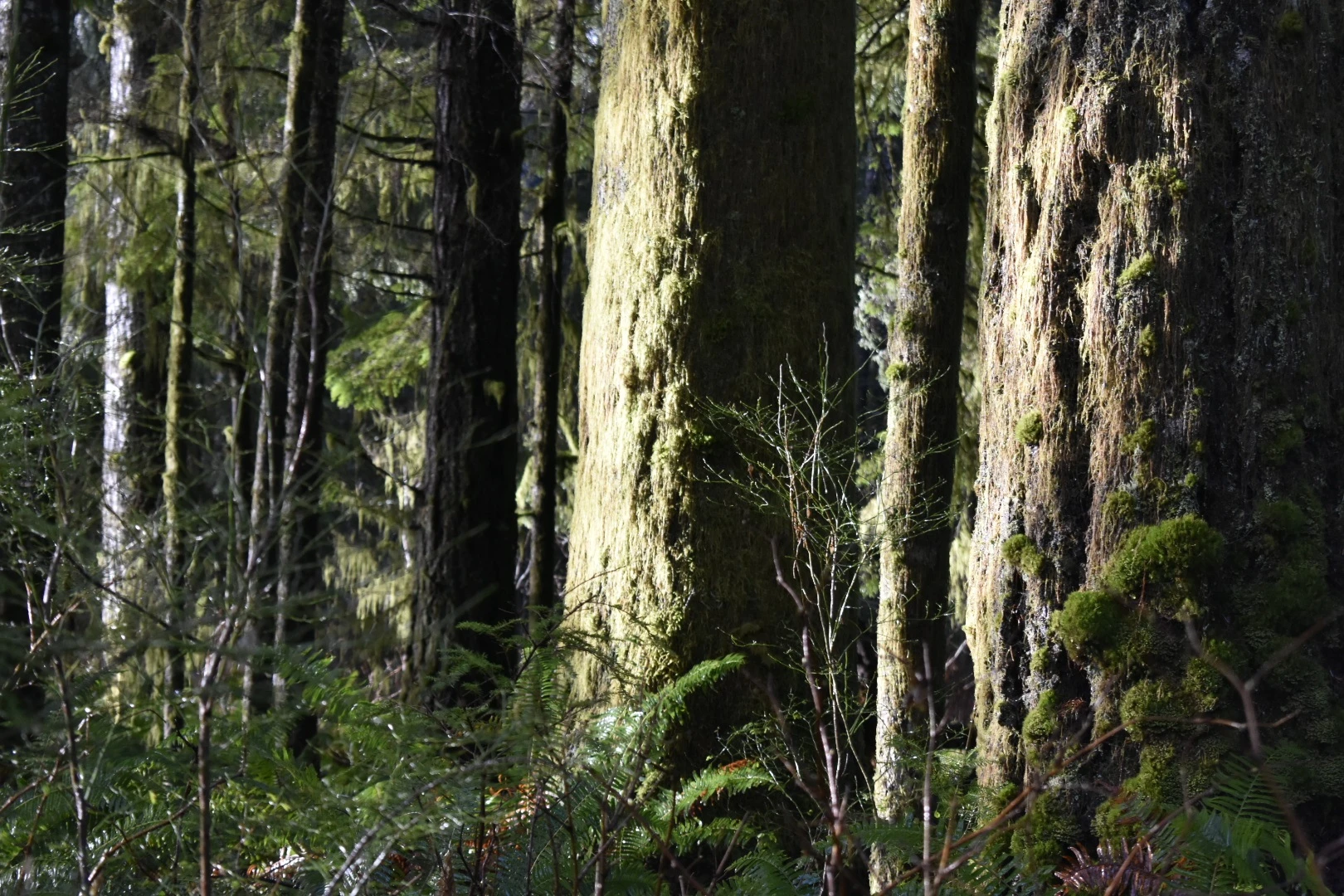
Humans are not separate from nature. Francis Weller, in his book, The Wild Edge of Sorrow: Rituals of Renewal and the Sacred Work of Grief writes that the debate about sustainability is intimately connected with an evolutionary understanding of life. That if one does not recognize the interconnectedness and the fragility of life, one’s moral framework will likely lack a commitment to sustainability. There is a tangible connection between our ethical life and our felt sense of connection with the wider surround of Bear, Tree, Eagle, and River. To lose the chance for conviviality with the “beautiful and strange otherness” (a term that Paul Shepard uses) is to diminish our inner lives as well as the outer world. We die a little every time we close off the heart and shut out the living world from our attention. The wild within and the wild without are kin, the one enlivening the other in a beautiful tango.
My contemplative time in nature has changed the way I experience myself through an ever-widening process of identification. This, in turn, has resulted in the development of a personal ecological ethic – a set of principles that guide who I am and what I do; a sense of what is right for my soul. This will be different for each of us. It is our internal compass that guides us toward authenticity, regardless of external pressures. In nature, there are no straight lines. The path toward embodying a genuine and congruent ecological ethic is an ever-evolving dance, and it is one that we can navigate according to context and need.
An ecological ethic begins within each of us, in our minds, our hearts, our souls, and our bodies. Each of us has a deep and timeless kinship with all life; past, present, and future. I invite you to spend time thinking about everything this implies. When I do, I feel awe and inspiration, grief and joy, strength and humility. This is what helps me to stay awake and act from a place of consideration and respect for All My Relations. What is it that helps you to stay awake? What are the values that are at the core of your ecological ethic? How does this inform your way of being in the world?
Posted by Corinna Stevenson.
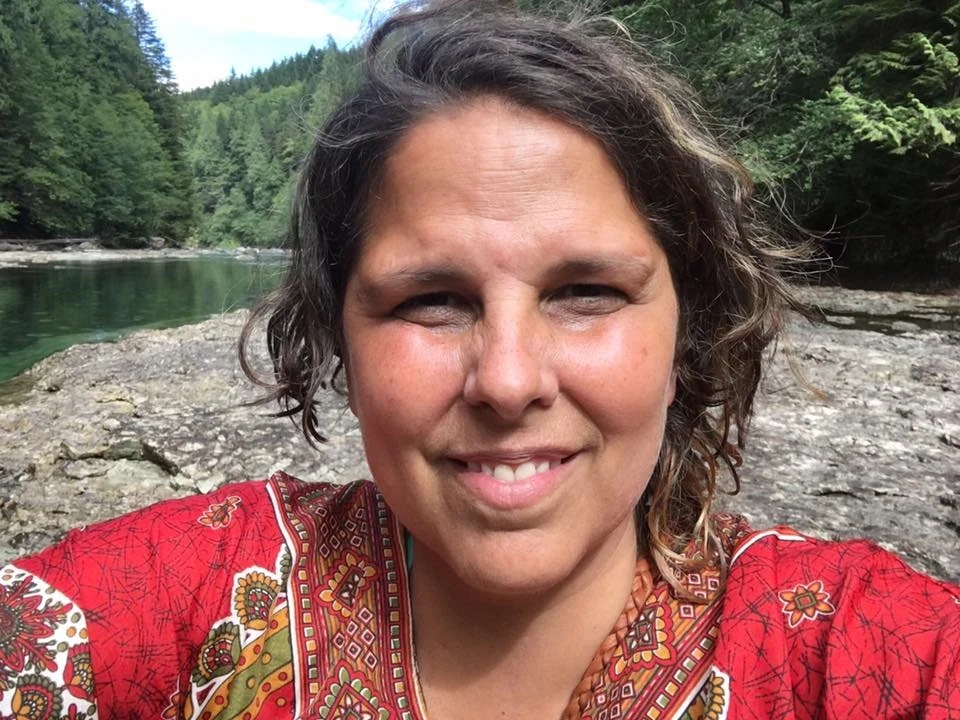 I have always loved nature. It's where I'm most at peace. For 10 amazing and intense years, I had the privilege of sharing my love for wild places with youth and families struggling to find their way in mainstream culture. We kayaked, hiked, spoke our truth at Council Fire, and formed uncommon bonds that to this day remain a source of inspiration. The place we did this work is called Ravenwood. It is a healing forest.
In 2010, I was diagnosed with multiple myeloma, a rare and incurable plasma cell cancer. I needed a stem cell transplant and a radical change of lifestyle. Along with a good medical team and a strong and loving circle of people supporting me, Ravenwood saved my life. 8 years later, I'm still here. Ravenwood is now home to my family. Although I can no longer do the physical work of a wilderness guide, it remains my calling to share the healing powers of nature. I still call myself a guide but the places I now navigate and explore are the wild terrains that live within the human soul. Nature is my co-guide.
I work with the natural world to help make sense of inner emotions and life experiences. I believe that spending time in nature fosters awareness and interconnection to the world around us, providing the space for inward reflection and the potential for transformation. How we encounter and interpret the natural world creates a personal narrative that gives meaning to experiences and emotions allowing us to develop new ways of understanding ourselves and feeling fully integrated in our lives. Through connection with the natural world, we ultimately become connected to our ‘inner’ nature. Personal distress can be alleviated by developing the mutual connection between inside and outside.
The process of change I foster involves restoring balance to the physical, emotional, mental, and spiritual dimensions, reconnecting to the Earth, and adopting life-long practices that help incorporate new behaviour and thought patterns into a congruent way of life. My work as guide is to help reveal and cultivate the health and sanity which is already there rather than manipulate or modify sick people to be better adjusted. This requires a focus on healing through a process of whole-ing (recognizing the wholeness that already exists within), rather than healing or fixing a problem by eliminating it; wholeness-centered (holistic) instead of pathology-centered
I work with a range of practices including mindfulness and awareness, experiential activities, direct contact with nature, narrative therapy, environmental action, journaling, ritual, ceremony, and play.
As an aboriginal woman of Métis descent, I weave cultural teachings into my work, inspiring personal growth and a love and respect for the natural world.
Academically, I hold a Bachelor's in education, from McGill University and a Master’s of Arts in transpersonal psychology with a concentration in ecopsychology, from Naropa University. I have also completed masters level clinical counselling courses in counselling theory, family systems therapy, group therapy, and research methods, and have trained with the Vancouver School of Narrative Therapy. I am a recognized facilitator of Joanna Macy's Work That Reconnects and a Level 3 Reiki Usui Practitioner.
I have always loved nature. It's where I'm most at peace. For 10 amazing and intense years, I had the privilege of sharing my love for wild places with youth and families struggling to find their way in mainstream culture. We kayaked, hiked, spoke our truth at Council Fire, and formed uncommon bonds that to this day remain a source of inspiration. The place we did this work is called Ravenwood. It is a healing forest.
In 2010, I was diagnosed with multiple myeloma, a rare and incurable plasma cell cancer. I needed a stem cell transplant and a radical change of lifestyle. Along with a good medical team and a strong and loving circle of people supporting me, Ravenwood saved my life. 8 years later, I'm still here. Ravenwood is now home to my family. Although I can no longer do the physical work of a wilderness guide, it remains my calling to share the healing powers of nature. I still call myself a guide but the places I now navigate and explore are the wild terrains that live within the human soul. Nature is my co-guide.
I work with the natural world to help make sense of inner emotions and life experiences. I believe that spending time in nature fosters awareness and interconnection to the world around us, providing the space for inward reflection and the potential for transformation. How we encounter and interpret the natural world creates a personal narrative that gives meaning to experiences and emotions allowing us to develop new ways of understanding ourselves and feeling fully integrated in our lives. Through connection with the natural world, we ultimately become connected to our ‘inner’ nature. Personal distress can be alleviated by developing the mutual connection between inside and outside.
The process of change I foster involves restoring balance to the physical, emotional, mental, and spiritual dimensions, reconnecting to the Earth, and adopting life-long practices that help incorporate new behaviour and thought patterns into a congruent way of life. My work as guide is to help reveal and cultivate the health and sanity which is already there rather than manipulate or modify sick people to be better adjusted. This requires a focus on healing through a process of whole-ing (recognizing the wholeness that already exists within), rather than healing or fixing a problem by eliminating it; wholeness-centered (holistic) instead of pathology-centered
I work with a range of practices including mindfulness and awareness, experiential activities, direct contact with nature, narrative therapy, environmental action, journaling, ritual, ceremony, and play.
As an aboriginal woman of Métis descent, I weave cultural teachings into my work, inspiring personal growth and a love and respect for the natural world.
Academically, I hold a Bachelor's in education, from McGill University and a Master’s of Arts in transpersonal psychology with a concentration in ecopsychology, from Naropa University. I have also completed masters level clinical counselling courses in counselling theory, family systems therapy, group therapy, and research methods, and have trained with the Vancouver School of Narrative Therapy. I am a recognized facilitator of Joanna Macy's Work That Reconnects and a Level 3 Reiki Usui Practitioner.
