
Sit Spot Blues
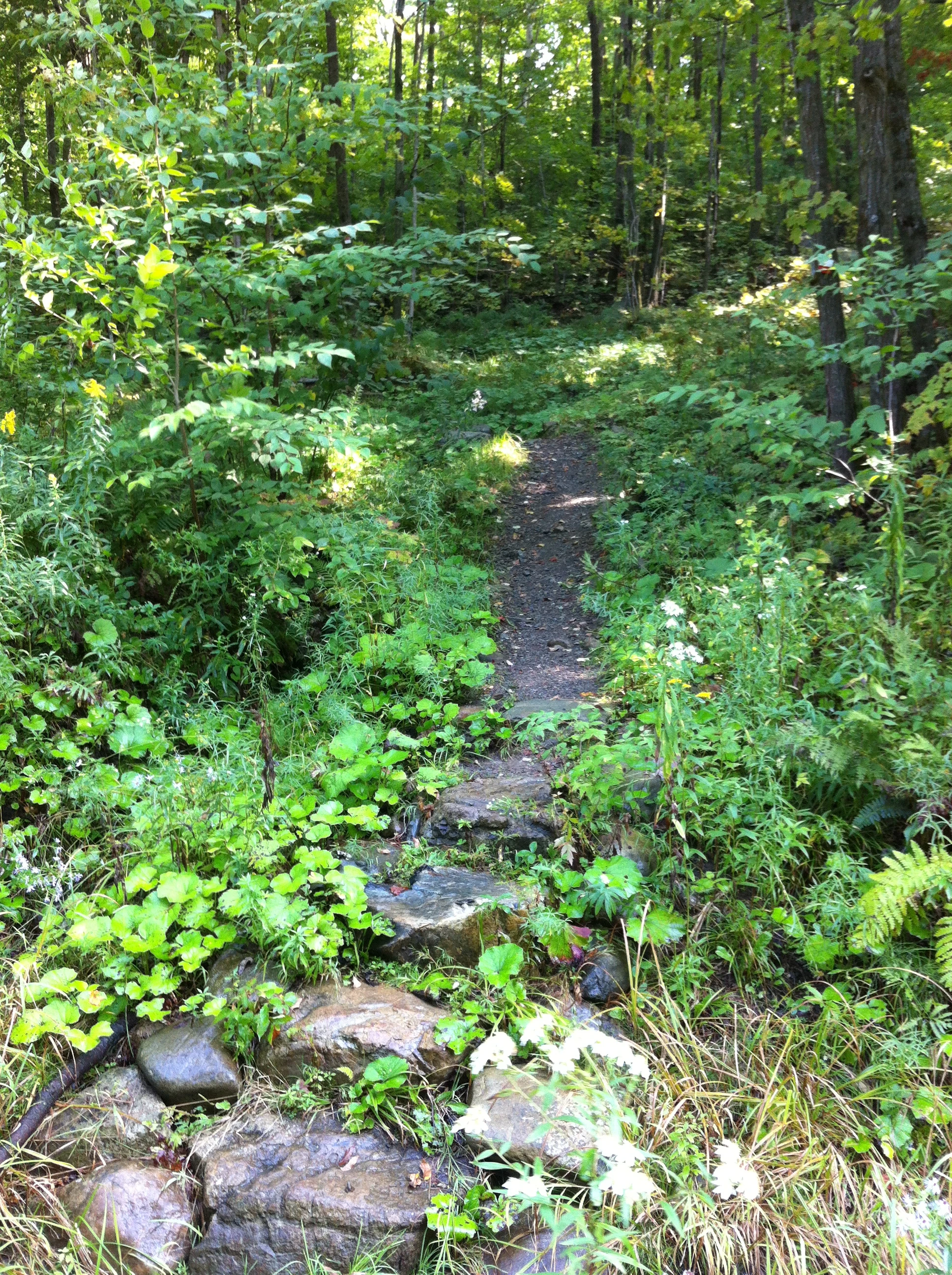
In contemplating what to post this week, my thoughts kept returning to a conversation I recently had with a good friend of mine. It went something like this:
Me: I went to my sit spot tree this morning. It's been a couple of days. Since then, the raccoons have turned it into their latrine and there's a dead Yellow Rumped Warbler. 6 piles of shit and a bird carcass at my sit spot... What does it mean!!!!! (LOL). I will proceed cautiously with the rest of my day (anxiously giggling), but first I shall meditate (laughing). Hope your day starts off better than mine. Grateful to see Coyote is alive and well,
Friend: I think yes, my day started better than yours. But grasshopper, many lessons are to be found in dead bird carcasses and piles of shit, he said unconvincingly. I wonder if the raccoons are trying to mark the spot as theirs. It will be interesting to observe over the next few weeks.
Me: You make me laugh:) I get the distinct impression it is territorial. I'm not talking little poops either. This is one well fed coon. That's all I need, a rabid coon fighting me for my sit spot. They can be vicious little buggers! I wonder if it killed the bird or if it was a random coincidence. It didn't look like it was attacked but maybe the little Zorro wannabe just swatted it right off its perch and it fell to its demise. Seriously though, I'll take the next tree over and see what happens. Could be dangerous... I'll have to cloak myself and if that doesn't work, I'll activate my primal strength trigger. It'll be a while before I can sit under that Forest Guardian again. Yip!
Friend: If it's any consolation, I've never heard of a raccoon attacking a human. They will growl and snarl, but they back off and retreat after letting you know that they'll fight if attacked. You could also bring up Wolf energy inside and spread that around.
Me: Or, I could urinate in a ring around its poop and see what happens. I always carry a little wolf with me; maybe that's what did it in the first place. You can bet that if I get snarled or growled at my shackles will come up. Either that or I'll pee my pants laughing at the little guy. In any case, I'm kind of looking forward to seeing how my relationship with Cujo, I mean Zorro evolves. P.S. What if it’s not a racoon...
Friend: Maybe it really isn't a raccoon. The behaviour of pooping to mark territory is more coyote- or wolf-like. Just pee right beside, on your side of the marking. That'll save trying to walk… Tee hee.
Me: Laughing!!! Hold on a sec, I'll go take a picture and send it to you.
When I reflect on this dialogue I keep coming back to two main things: First, I am so very grateful for my dear friend, Wes. Our friendship is like those of childhood when you have someone with whom you share a secret language that no one else understands. Secondly, what comes to mind is the importance of connection to the natural world in supporting physical, emotional, mental, and spiritual health. In my life, the Sit Spot is a practice that helps keep me grounded in my authentic Self. It’s a simple practice, really. All it involves is finding a place in nature where I can go to regularly and sit. What emerges as a result of this act is remarkably powerful. Go ahead, try it and you’ll see what I mean. If you do and think nothing happened, have faith, keep going, and write about in a special journal. If you’re willing, share your story with us.
Here are a few simple guidelines to follow:
1) Going to your Sit Spot should be something that you try and do often, even if it is only for ten minutes.
2) Find one place that you can get to know really, really well. Know it by day, know it by night. Know it in the rain and in the snow, in the depth of winter and in the heat of summer. Know the stars and where the four directions are there. Know the birds that live there, know the trees they live in. Get to know these things as if they were your relatives. Take the time to listen to the wind, to check in with your heart and allow yourself to just be.
3) Make sure that your Sit Spot is close to where you live. If it is more than ten minutes away, you will tend not to go.
4) Your Sit Spot has to be outdoors
5) While at your Sit Spot, you have to be able to observe some wildlife. If you live in a city this is still possible. There are many creatures that inhabit the city. Just think outside of the box.
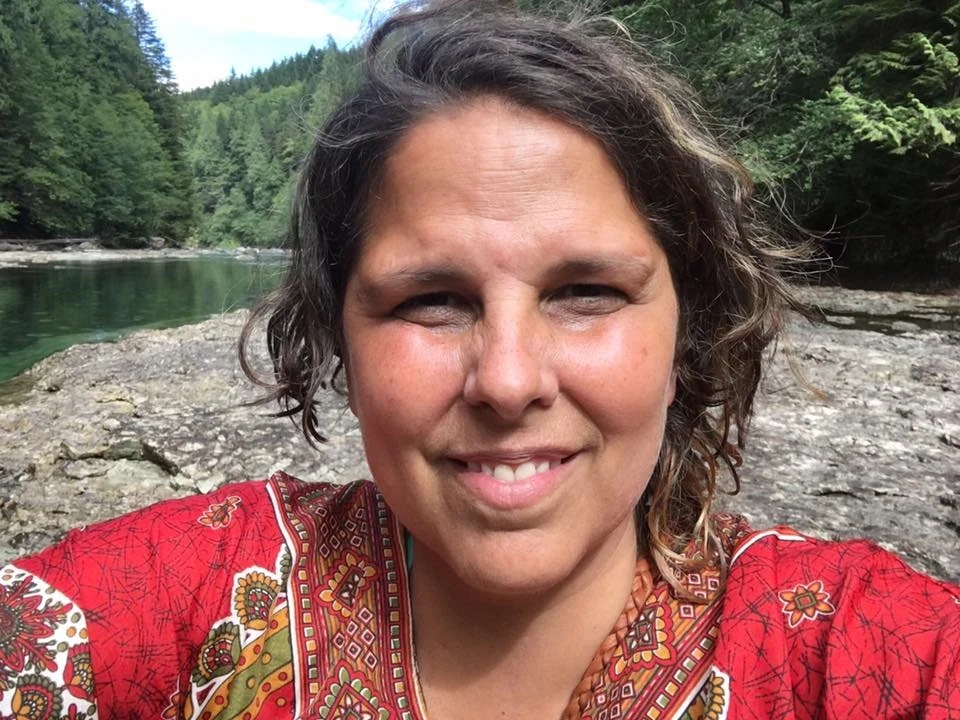 I have always loved nature. It's where I'm most at peace. For 10 amazing and intense years, I had the privilege of sharing my love for wild places with youth and families struggling to find their way in mainstream culture. We kayaked, hiked, spoke our truth at Council Fire, and formed uncommon bonds that to this day remain a source of inspiration. The place we did this work is called Ravenwood. It is a healing forest.
In 2010, I was diagnosed with multiple myeloma, a rare and incurable plasma cell cancer. I needed a stem cell transplant and a radical change of lifestyle. Along with a good medical team and a strong and loving circle of people supporting me, Ravenwood saved my life. 8 years later, I'm still here. Ravenwood is now home to my family. Although I can no longer do the physical work of a wilderness guide, it remains my calling to share the healing powers of nature. I still call myself a guide but the places I now navigate and explore are the wild terrains that live within the human soul. Nature is my co-guide.
I work with the natural world to help make sense of inner emotions and life experiences. I believe that spending time in nature fosters awareness and interconnection to the world around us, providing the space for inward reflection and the potential for transformation. How we encounter and interpret the natural world creates a personal narrative that gives meaning to experiences and emotions allowing us to develop new ways of understanding ourselves and feeling fully integrated in our lives. Through connection with the natural world, we ultimately become connected to our ‘inner’ nature. Personal distress can be alleviated by developing the mutual connection between inside and outside.
The process of change I foster involves restoring balance to the physical, emotional, mental, and spiritual dimensions, reconnecting to the Earth, and adopting life-long practices that help incorporate new behaviour and thought patterns into a congruent way of life. My work as guide is to help reveal and cultivate the health and sanity which is already there rather than manipulate or modify sick people to be better adjusted. This requires a focus on healing through a process of whole-ing (recognizing the wholeness that already exists within), rather than healing or fixing a problem by eliminating it; wholeness-centered (holistic) instead of pathology-centered
I work with a range of practices including mindfulness and awareness, experiential activities, direct contact with nature, narrative therapy, environmental action, journaling, ritual, ceremony, and play.
As an aboriginal woman of Métis descent, I weave cultural teachings into my work, inspiring personal growth and a love and respect for the natural world.
Academically, I hold a Bachelor's in education, from McGill University and a Master’s of Arts in transpersonal psychology with a concentration in ecopsychology, from Naropa University. I have also completed masters level clinical counselling courses in counselling theory, family systems therapy, group therapy, and research methods, and have trained with the Vancouver School of Narrative Therapy. I am a recognized facilitator of Joanna Macy's Work That Reconnects and a Level 3 Reiki Usui Practitioner.
I have always loved nature. It's where I'm most at peace. For 10 amazing and intense years, I had the privilege of sharing my love for wild places with youth and families struggling to find their way in mainstream culture. We kayaked, hiked, spoke our truth at Council Fire, and formed uncommon bonds that to this day remain a source of inspiration. The place we did this work is called Ravenwood. It is a healing forest.
In 2010, I was diagnosed with multiple myeloma, a rare and incurable plasma cell cancer. I needed a stem cell transplant and a radical change of lifestyle. Along with a good medical team and a strong and loving circle of people supporting me, Ravenwood saved my life. 8 years later, I'm still here. Ravenwood is now home to my family. Although I can no longer do the physical work of a wilderness guide, it remains my calling to share the healing powers of nature. I still call myself a guide but the places I now navigate and explore are the wild terrains that live within the human soul. Nature is my co-guide.
I work with the natural world to help make sense of inner emotions and life experiences. I believe that spending time in nature fosters awareness and interconnection to the world around us, providing the space for inward reflection and the potential for transformation. How we encounter and interpret the natural world creates a personal narrative that gives meaning to experiences and emotions allowing us to develop new ways of understanding ourselves and feeling fully integrated in our lives. Through connection with the natural world, we ultimately become connected to our ‘inner’ nature. Personal distress can be alleviated by developing the mutual connection between inside and outside.
The process of change I foster involves restoring balance to the physical, emotional, mental, and spiritual dimensions, reconnecting to the Earth, and adopting life-long practices that help incorporate new behaviour and thought patterns into a congruent way of life. My work as guide is to help reveal and cultivate the health and sanity which is already there rather than manipulate or modify sick people to be better adjusted. This requires a focus on healing through a process of whole-ing (recognizing the wholeness that already exists within), rather than healing or fixing a problem by eliminating it; wholeness-centered (holistic) instead of pathology-centered
I work with a range of practices including mindfulness and awareness, experiential activities, direct contact with nature, narrative therapy, environmental action, journaling, ritual, ceremony, and play.
As an aboriginal woman of Métis descent, I weave cultural teachings into my work, inspiring personal growth and a love and respect for the natural world.
Academically, I hold a Bachelor's in education, from McGill University and a Master’s of Arts in transpersonal psychology with a concentration in ecopsychology, from Naropa University. I have also completed masters level clinical counselling courses in counselling theory, family systems therapy, group therapy, and research methods, and have trained with the Vancouver School of Narrative Therapy. I am a recognized facilitator of Joanna Macy's Work That Reconnects and a Level 3 Reiki Usui Practitioner.
